
Crown Hair Transplant
The crown is more than an area to fill. Hair changes direction around a natural whorl, loss can cover a large surface, and crown work can use much of the donor reserve.
Explore: Crown Hair Transplant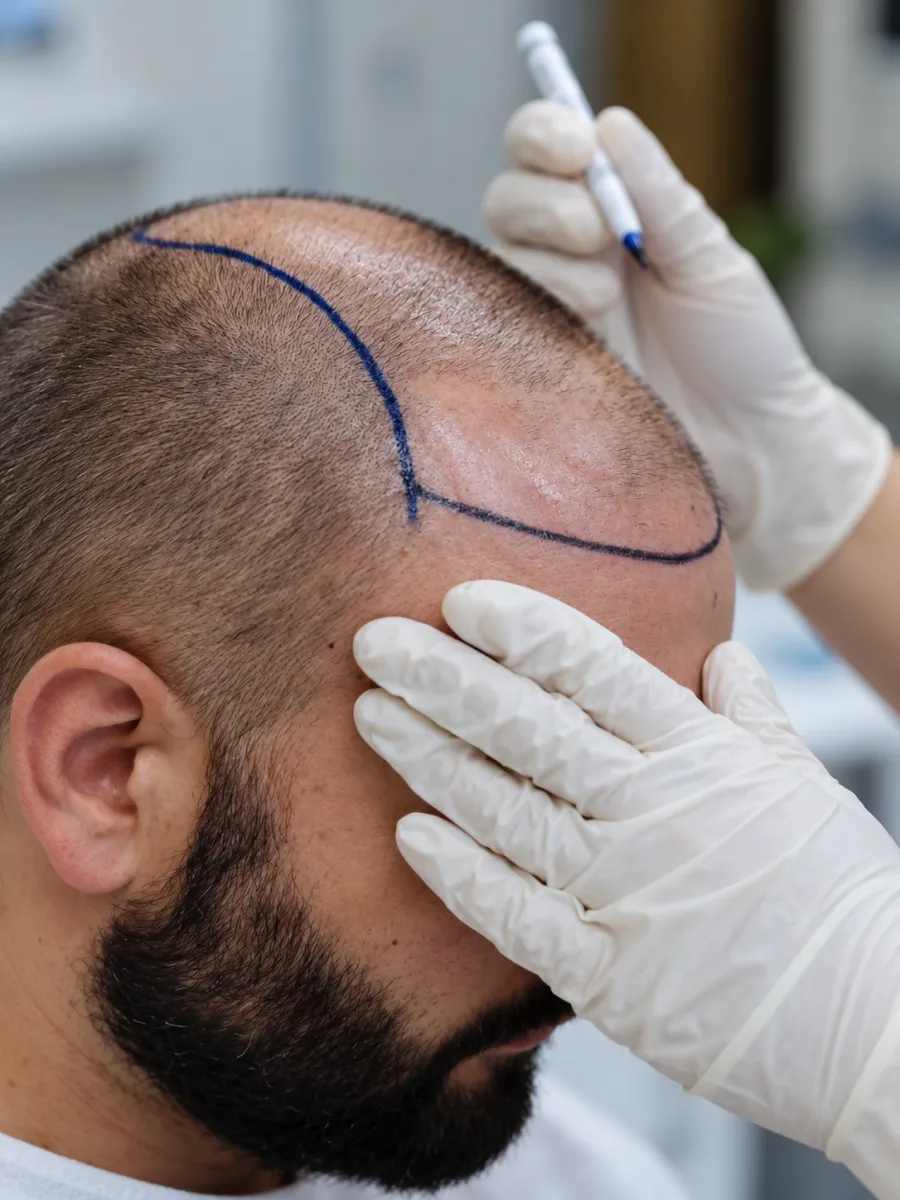
Hair Restoration
Doctor-led hair restoration in Whitefield, Bangalore. Every plan starts with an assessment of your hair loss, scalp and donor area, so the technique is chosen for you rather than the other way round.
Hair loss has many causes, and the right next step depends on what is driving it, how much donor hair you have and how your hair may change over the years. At NeoSculpt6, Dr Sandeep Mahapatra assesses each of these before recommending a transplant, a non-surgical treatment or a combination.
Suitability, the technique used and the result you can expect vary from person to person. Your consultation explains your options, their limits and what recovery involves, so you can decide with clear information.
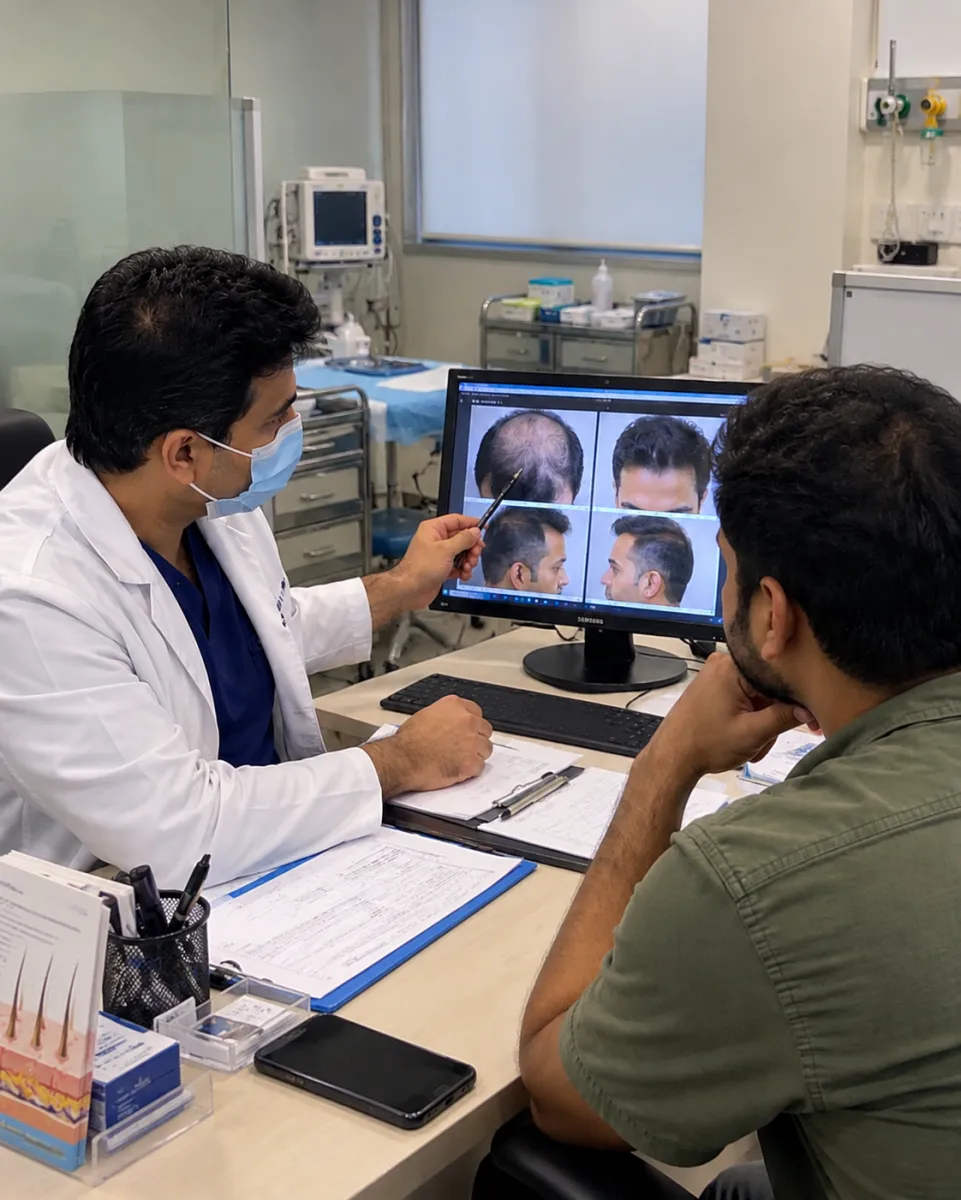
Your history, pattern of loss and scalp are reviewed by the doctor who plans your treatment.
How much donor hair can be used safely, now and for future sessions, guides every plan.
Shape, density and direction are designed to suit your face and age.
Transplant techniques, non-surgical scalp care, or a combination, discussed side by side.
Where a procedure is not the right step yet, you are told why and what may help instead.
Explore each treatment, or book a consultation and let the assessment point you to the right one.
Transplants planned around the area of loss, your hair type and your circumstances.
The crown is more than an area to fill. Hair changes direction around a natural whorl, loss can cover a large surface, and crown work can use much of the donor reserve.
Explore: Crown Hair TransplantTemple recession can change the hairline shape and make the forehead look wider. Temple hair grows at sharp angles, changes direction quickly and has finer hairs at the edge, so restoration is more than filling a gap.
Explore: Temple Hair TransplantHair loss in women can have many causes, including pattern thinning, hormones, nutrition, thyroid disease, traction, scarring and temporary shedding, so a transplant is not automatically the first step.
Explore: Female Hair TransplantWhen scalp donor grafts aren't enough for the planned restoration, selected body-hair sources can extend donor options.
Explore: Body Hair TransplantThis method suits selected patients who want to avoid a full head shave. The surgeon may work through existing hair, trim only a hidden donor area, or use another limited-shave approach, still harvesting individual follicular units.
Explore: Unshaven Hair TransplantPublic-facing people often need hair restoration planned around filming, work and privacy.
Explore: Celebrity Hair TransplantTravel adds decisions about suitability, length of stay, flight timing, follow-up and aftercare at home.
Explore: NRI Hair Transplant Consultation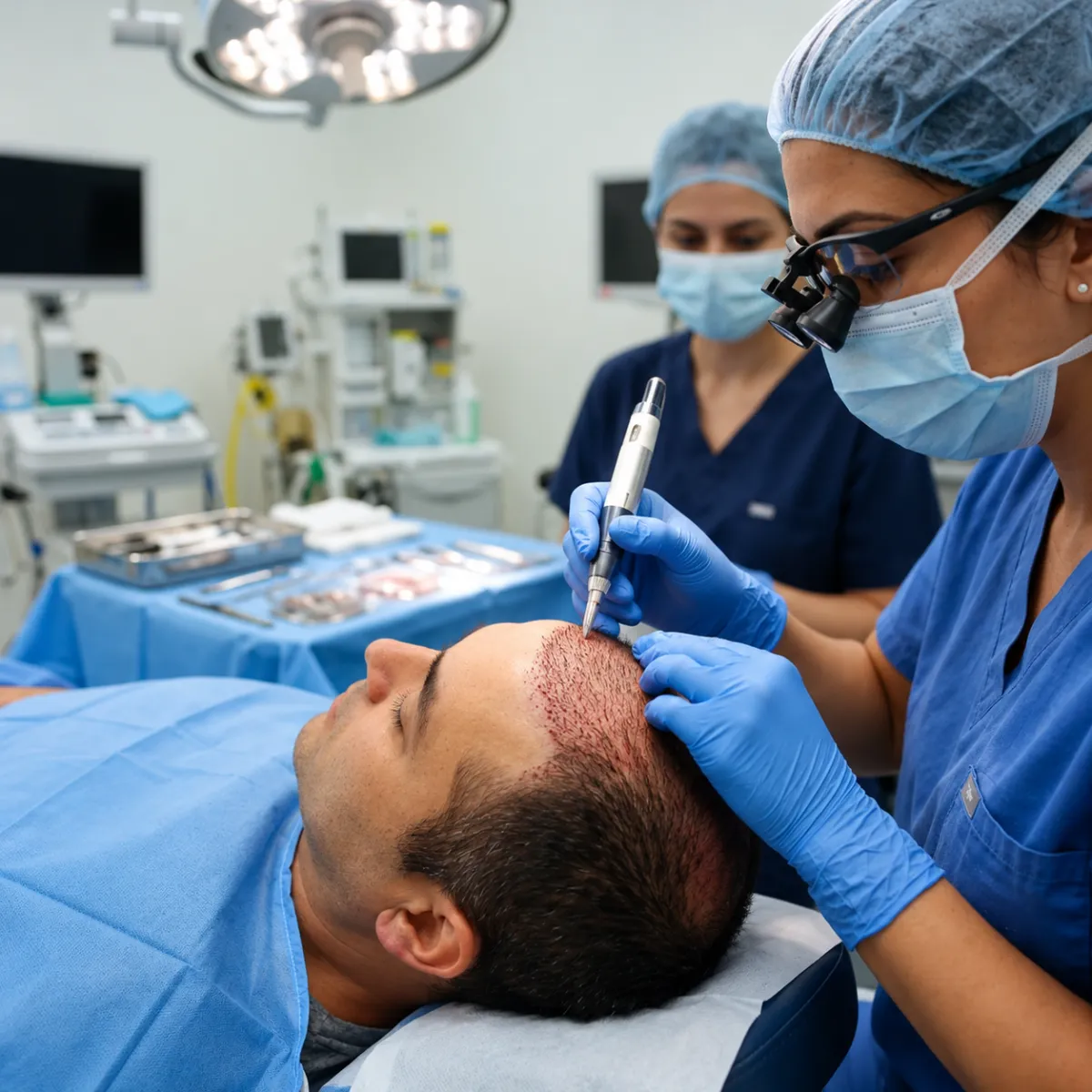
Ways of harvesting and implanting grafts, chosen for your hair and donor area rather than a technique’s name.
Neo Follicle/NFT is a named approach that raises the same clinical questions as any modern follicular-unit transplant: harvesting, donor protection, recipient design, graft handling and implantation.
Explore: Neo Follicle Hair TransplantFUE (Follicular Unit Extraction) removes individual follicular units from a suitable donor area instead of a strip of scalp, so donor planning matters because each harvest reduces future reserve.
Explore: FUE Hair TransplantHair loss can affect the hairline, crown and overall density, and the right plan depends on more than the technique's name.
Explore: DHI Hair TransplantA natural-looking result starts with a clear plan covering where hair is needed, how much the donor area can safely give, and how your hair loss may progress.
Explore: Direct Hair TransplantARTAS iX is a robotic hair-restoration system designed to assist experts during selected stages of hair transplantation.
Explore: ARTAS Robotic Hair Transplant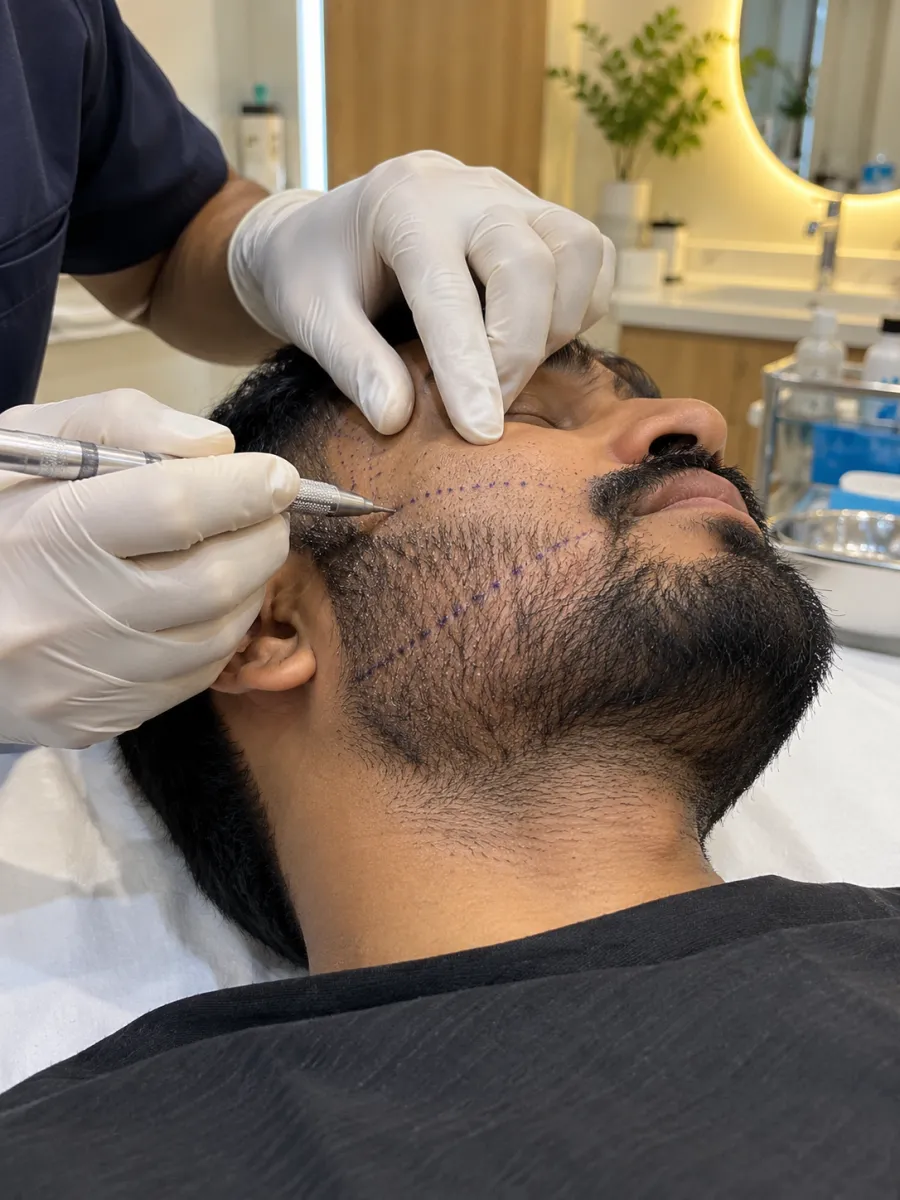
Facial hair and hairline work where shape, angle and density matter as much as coverage.
A beard transplant moves suitable donor follicles, usually from the scalp, to improve facial-hair density or shape.
Explore: Beard & Moustache TransplantEyebrow transplantation moves suitable donor follicles, usually from the scalp, into areas of sparse, over-plucked, scarred or missing brow hair.
Explore: Eyebrow Hair TransplantHairline shape affects how the face is perceived. For some transgender and gender-diverse patients, transplantation may soften a receded frontal pattern, restore temples, create a rounder or more feminine frame, or address other stable hair loss as part of a wider gender-affirming plan.
Explore: Transgender Hair Transplant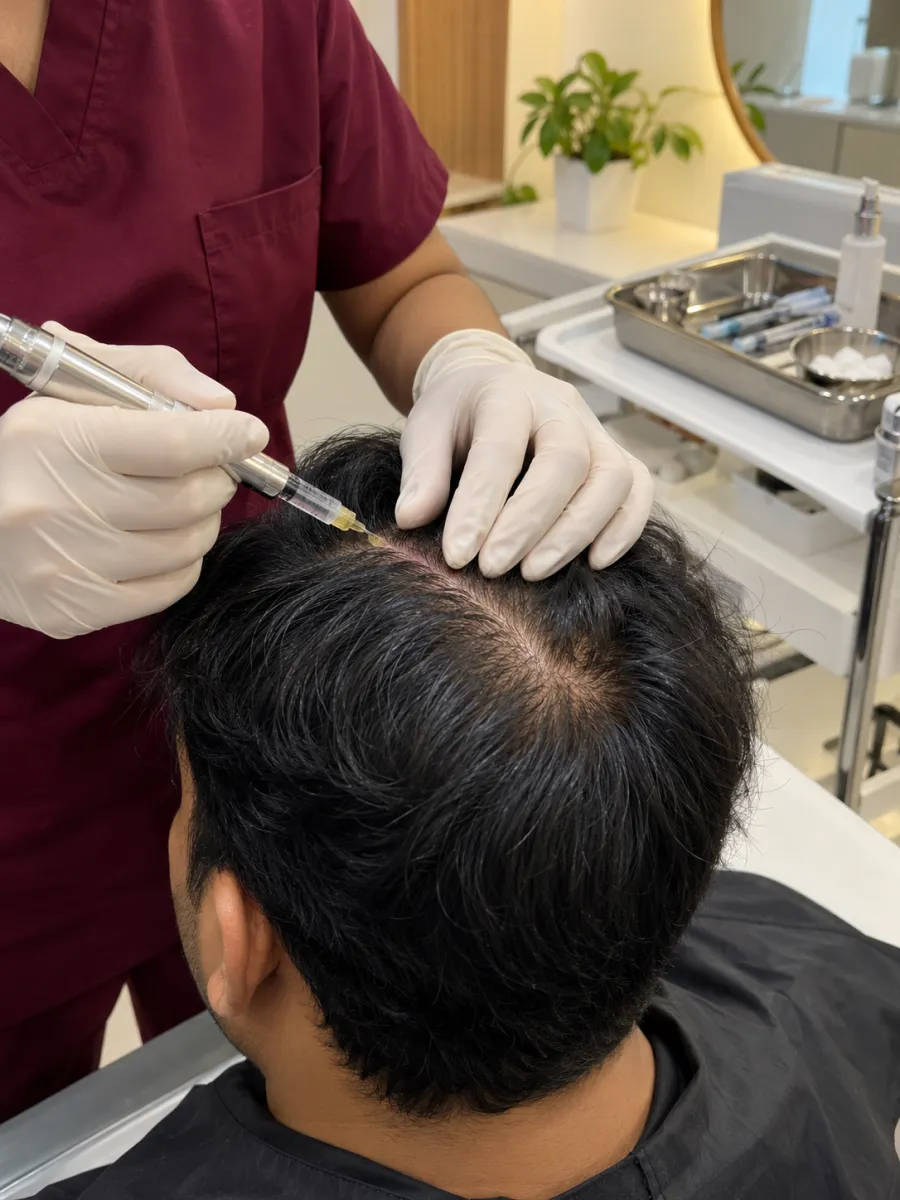
Options for some forms of thinning and shedding, and for the look of density, after a hair and scalp assessment.
PRP is made from the patient's own blood and injected into selected scalp areas as a non-surgical option for some forms of hair thinning, mainly where follicles are still present.
Explore: PRP Hair TreatmentGFC is an autologous treatment made from the patient's own blood. A dedicated system isolates a growth-factor-rich fraction, which is injected into selected thinning scalp areas.
Explore: GFC Hair TreatmentQR678 is an injectable hair-loss treatment built on a proprietary blend of growth factors and peptides.
Explore: QR678 Hair Regrowth TreatmentExosomes are small vesicles involved in cell signalling. Commercial products are studied for regenerative medicine and hair loss, but they differ in source, manufacturing, concentration, testing and regulatory status.
Explore: Exosome Hair Therapy"Hair filler" is a broad term for injectable scalp formulations meant to support thinning hair, and ingredients, regulatory status, protocol and evidence vary by product.
Explore: Hair Fillers TreatmentHair thinning has many possible causes, each needing a different treatment. NeoSculpt6 starts with a clinical hair and scalp assessment before recommending LLLT, a non-invasive light-based treatment that supports active hair follicles.
Explore: Low-Level Laser Hair Therapy (LLLT)"Stem cell hair therapy" is a broad marketing term that can describe very different products or procedures, such as cell-derived products, tissue concentrates or regenerative injections.
Explore: Neo-Follicle Stem Cell TherapySMP is a cosmetic procedure that places tiny pigment deposits in the scalp to mimic closely cut hair follicles or reduce contrast between hair and scalp.
Explore: Scalp Micropigmentation (SMP)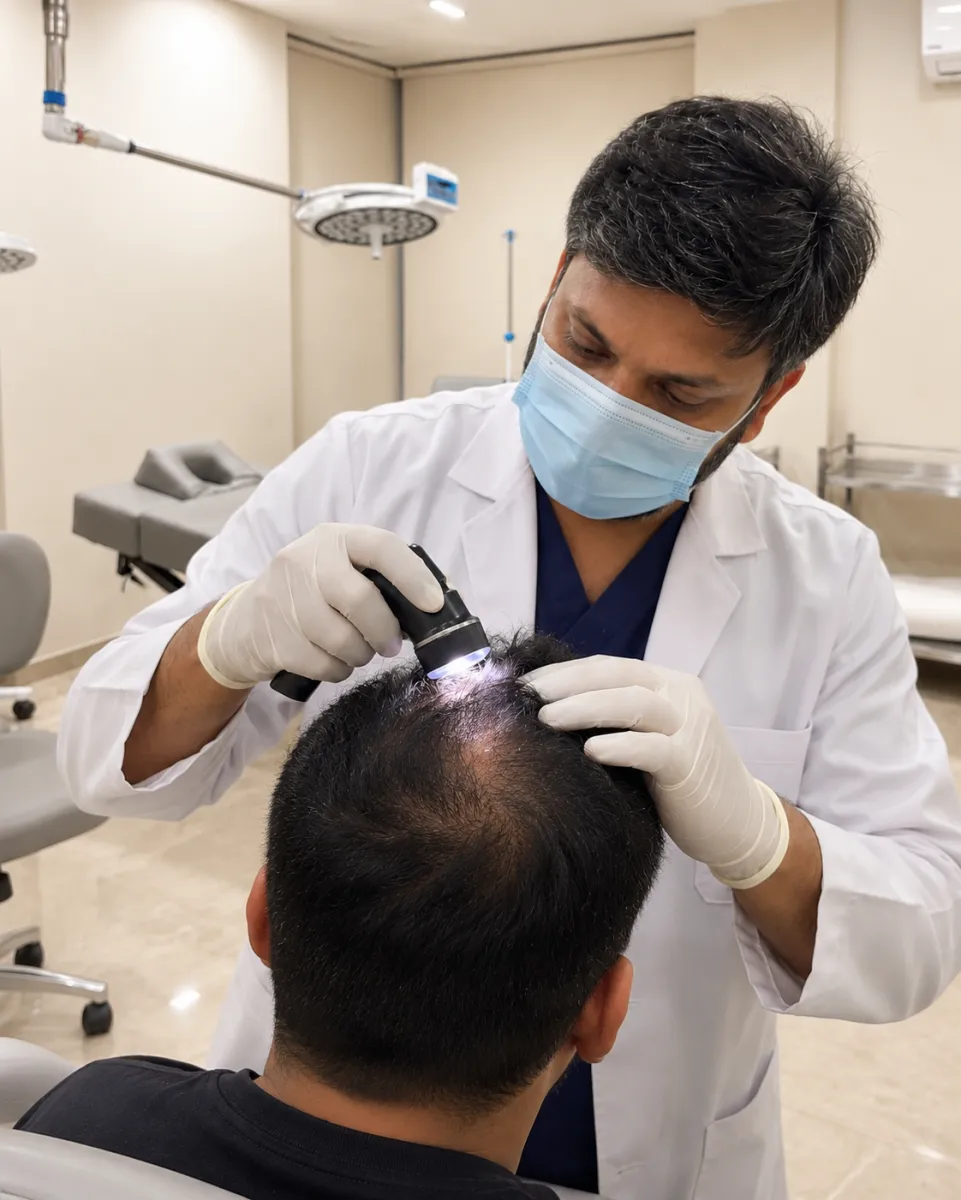
Assessment and planning for earlier transplants that did not go as hoped, and for hair lost to scarring.
Poor results can mean low growth, patchy density, an unnatural hairline, visible pluggy grafts, wrong direction, scarring, depleted donor hair or continued loss.
Explore: Failed Hair Transplant RepairBurn injuries can permanently damage follicles in the scalp, beard, moustache or eyebrows.
Explore: Burn Scar Hair TransplantStart with the concern closest to yours. Your consultation confirms which option, if any, suits you.
A hairline moving back at the front or temples.
Thinning on top, at the crown or along the parting.
A patchy beard or moustache, or sparse eyebrows.
Low growth, an unnatural hairline or a depleted donor area after earlier surgery.
More hair in the brush, or a scalp that needs checking before any treatment.
Book a consultation and start with an assessment of your hair, scalp and donor area.
Your Hair Assessment
Your history, the pattern and pace of your hair loss, and what you would like to change.
A review of donor density and quality, to judge how much can be used safely now and later.
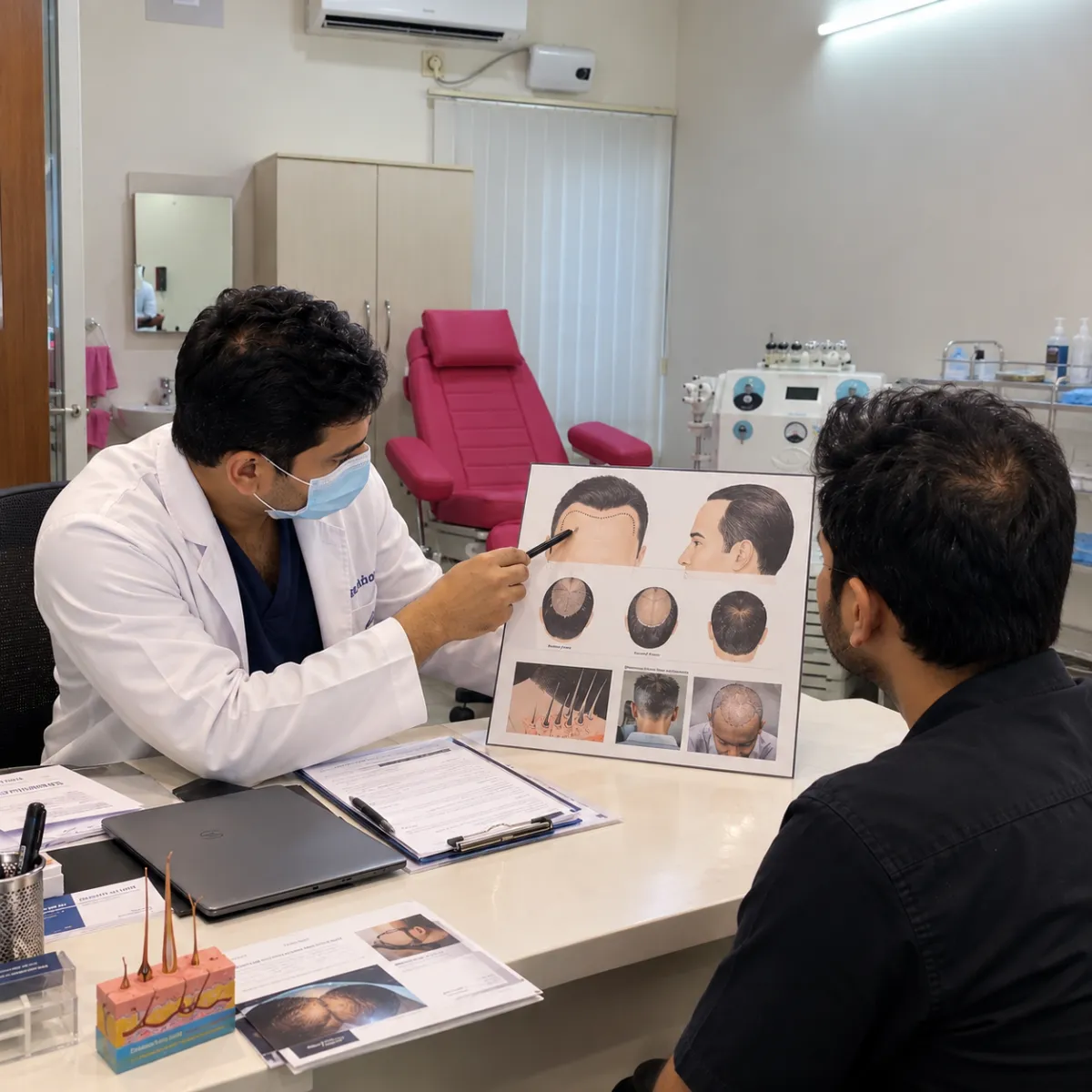
Where a transplant is suitable, the hairline and zones are planned to suit your face and how your hair may change.
The suitable techniques or non-surgical options, what each involves and their limits, before you decide.
Aftercare guidance and review appointments as your hair grows; results take time and vary from person to person.
Your Doctor
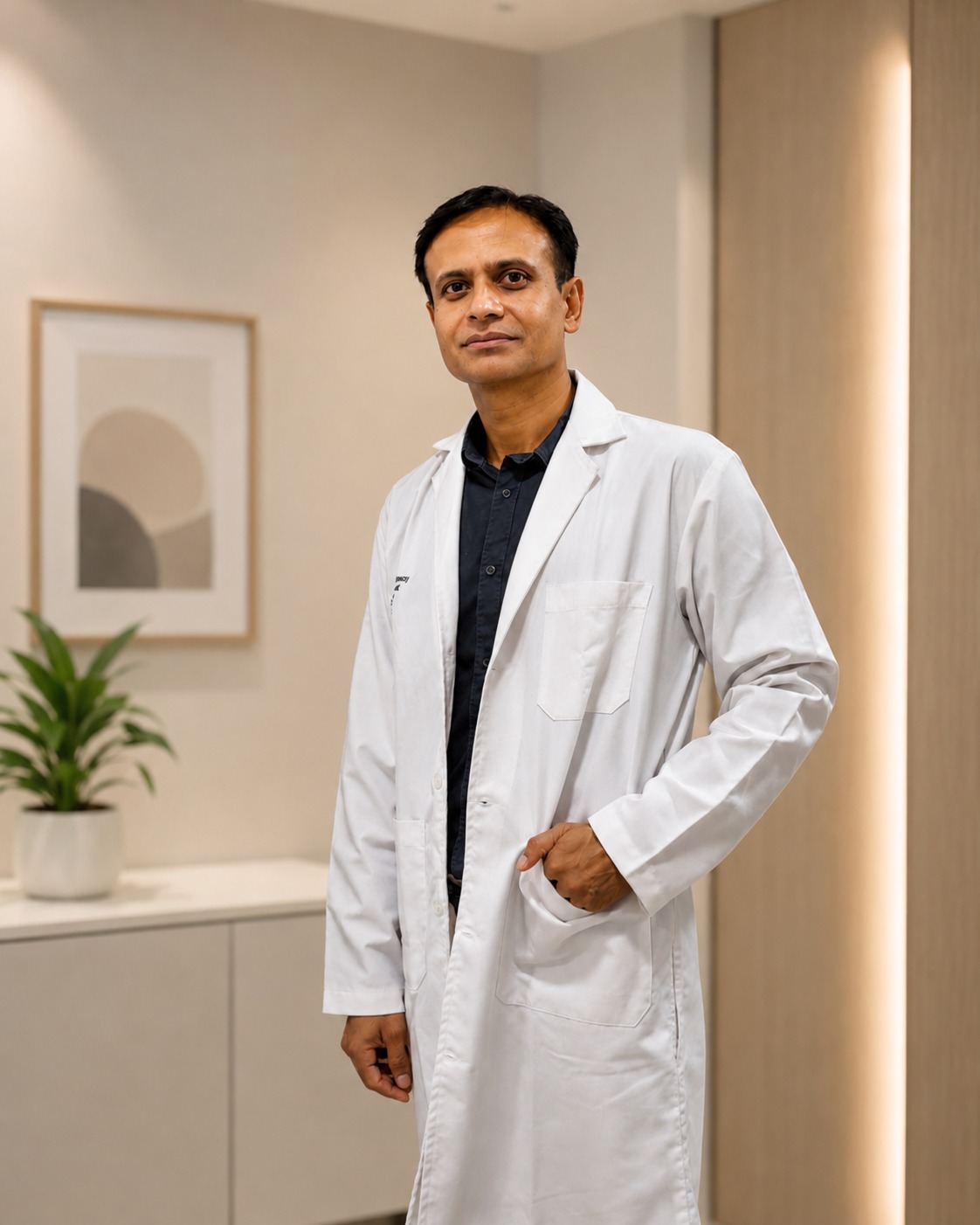
Senior Consultant Dermatologist, Cosmetic Expert & Hair Transplant Surgeon
Meet the Hair Restoration Expert
His approach focuses on diagnosis, donor conservation, natural hairline design, personalised treatment planning and long-term hair-restoration strategy.
Technology supports the assessment and the procedure; the plan remains the doctor’s clinical judgment.
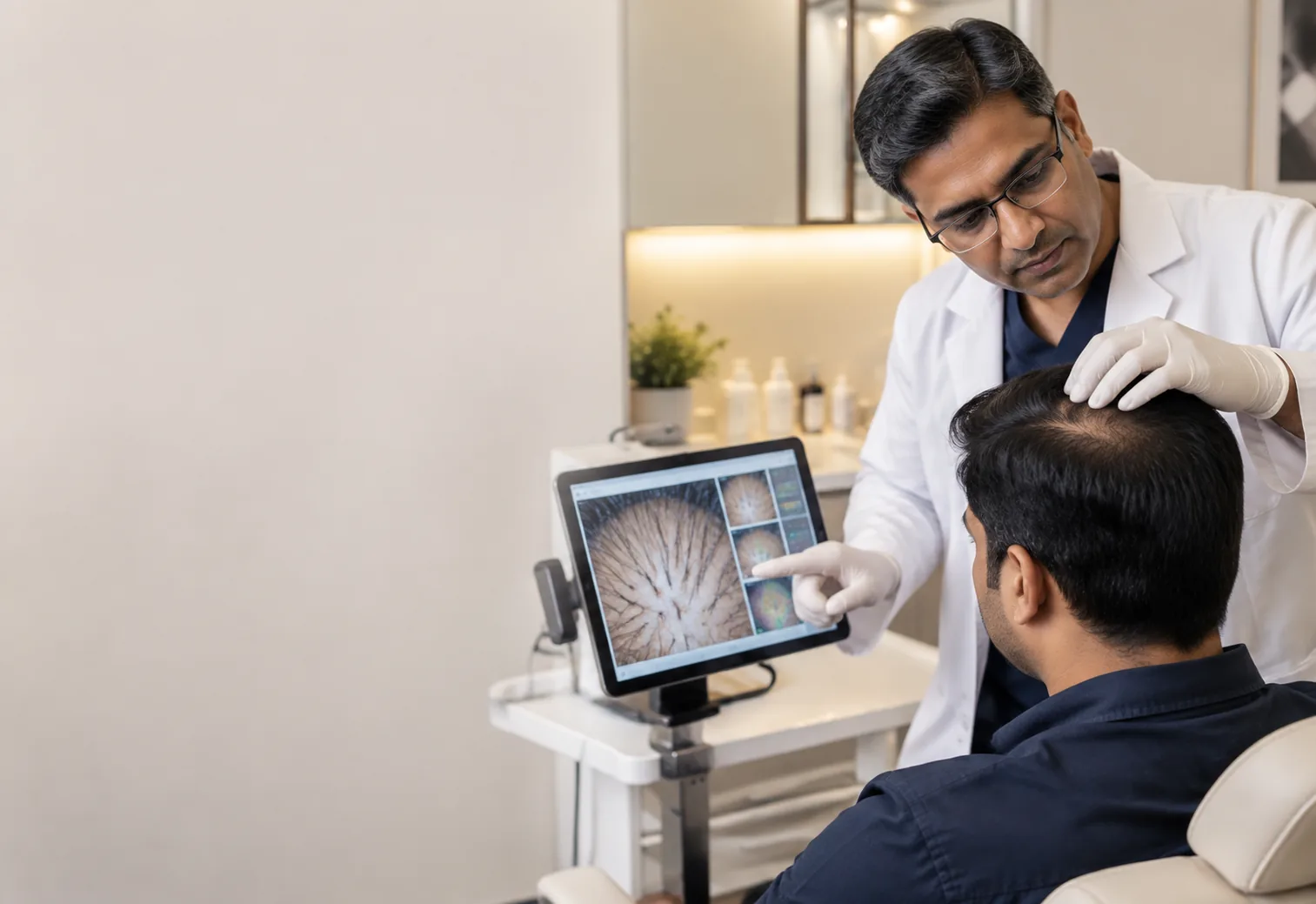
AI-Integrated Hair Analysis supports a more detailed review of hair density, scalp characteristics and hair-loss patterns during a consultation.
Read More: AI-Integrated Hair Analysis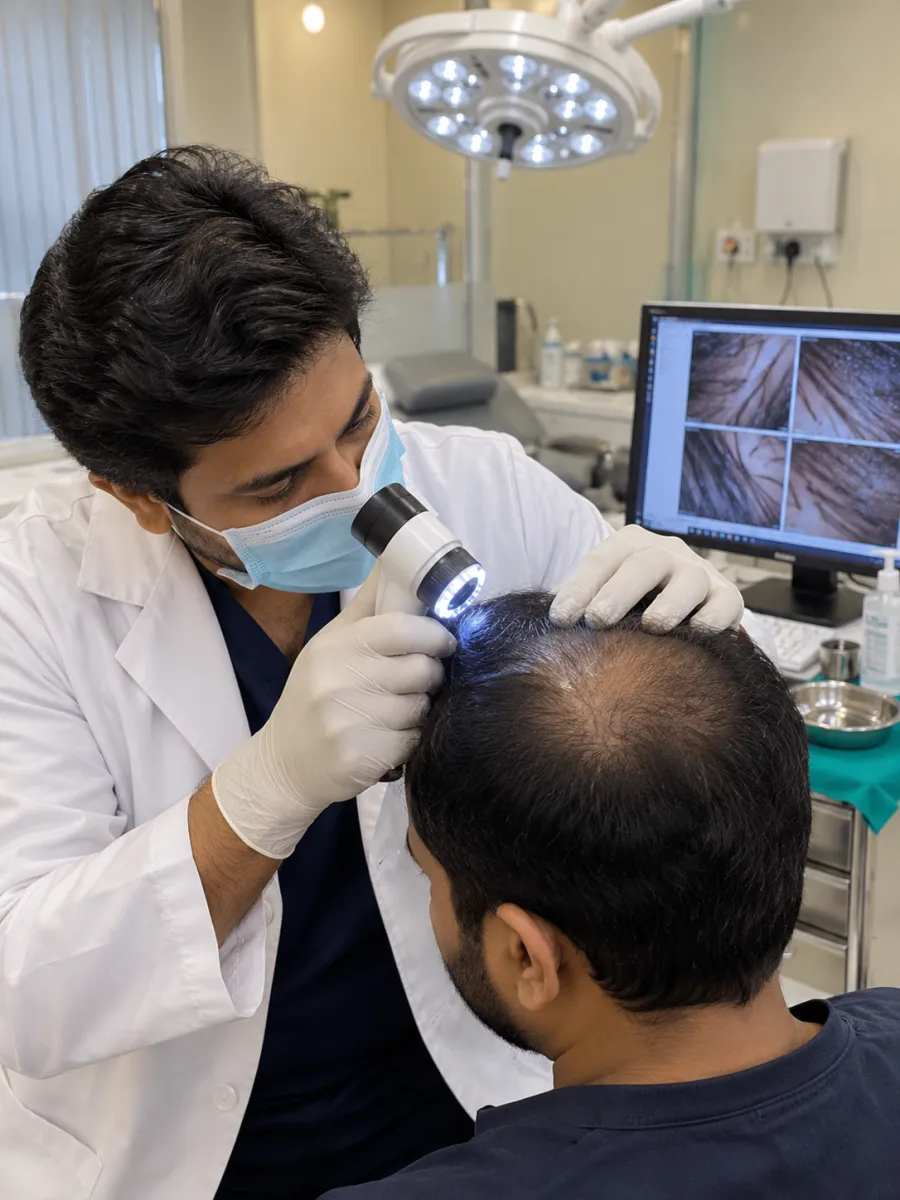
AI-Integrated Donor Assessment supports a closer review of the donor area for people considering hair restoration.
Read More: AI-Integrated Donor Assessment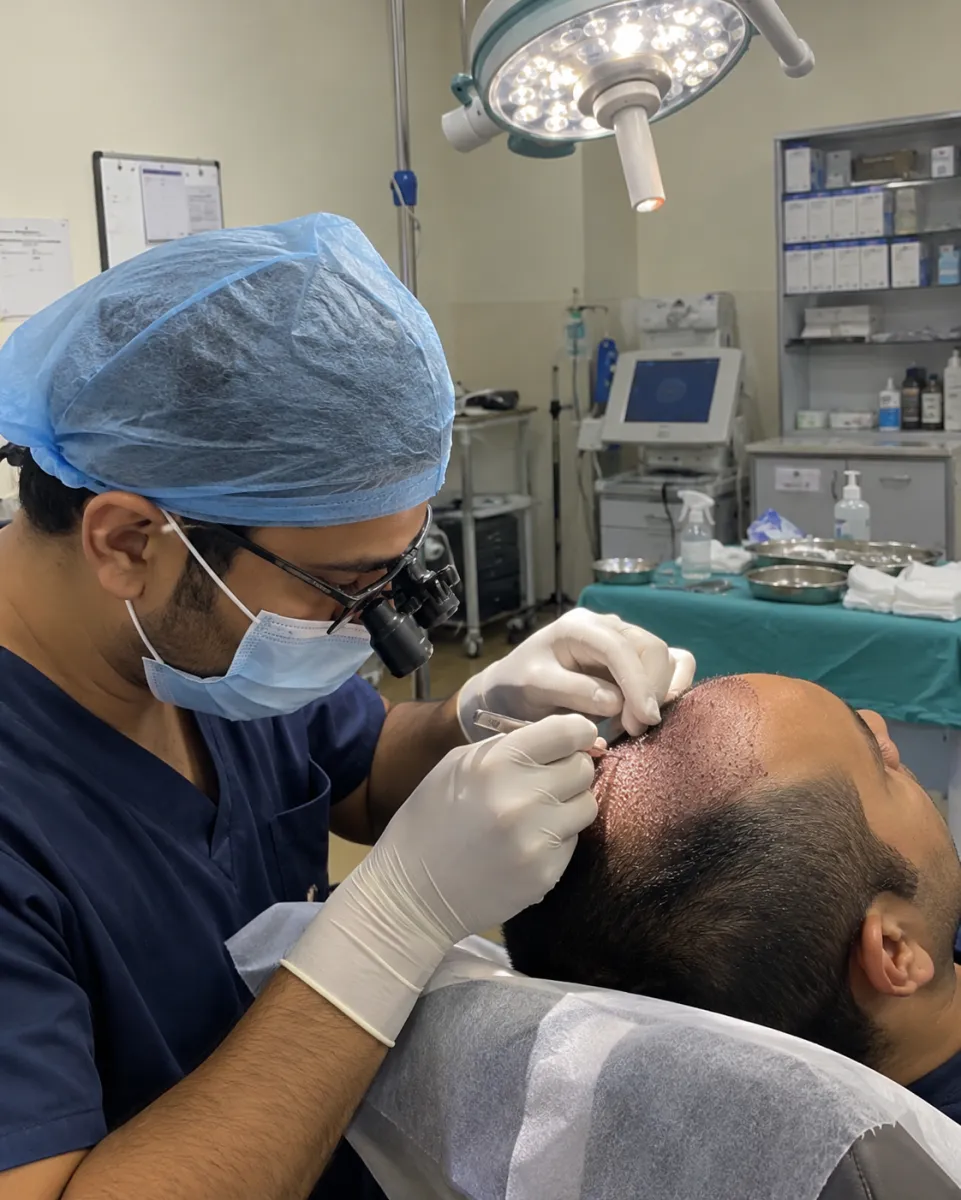
ARTAS iX is a robotic hair-restoration system designed to assist experts during selected stages of hair transplantation.
Read More: ARTAS Robotic Hair TransplantThere is no fixed price for hair restoration. Your cost is explained after an assessment, once the doctor knows what your plan involves.
The cause and extent of your hair loss, and whether a procedure is suitable now.
The method chosen for harvesting and implanting, or the non-surgical option.
How much donor hair is available and how much can be used safely.
Hairline, temples, crown, facial hair or more than one area.
Whether one session is planned, more than one, or combined care with follow-up.
Rated 4.8 on Google from 1,042 reviews of Neo Follicle
Quick Answers
It depends on the cause of your hair loss, the areas affected, your donor hair and your goals. The doctor assesses these at your consultation and explains which options may suit you and why.
Not everyone is. Suitability depends on a diagnosis of your hair loss, enough healthy donor hair and realistic expectations. Where a transplant is not the right step, the doctor explains other options.
NFT, FUE, DHI and other approaches are ways of harvesting and implanting grafts. The technique is chosen for your hair, scalp and donor area after an assessment, not by name.
For some forms of thinning and shedding, options such as PRP, GFC or laser therapy may be discussed. Whether they suit you, and what they can and cannot do, is explained after a hair and scalp assessment.
Some can. Repair depends on what went wrong, the donor hair that remains and the condition of the scalp, so it starts with a detailed assessment.
Cost depends on your assessment, the technique, your donor supply, the zones treated and your plan, so it is explained after your consultation rather than quoted in advance.

Start with an assessment
Meet the doctor, have your hair, scalp and donor area assessed, and leave with a clear explanation of your options at NeoSculpt6, Whitefield, Bangalore.